
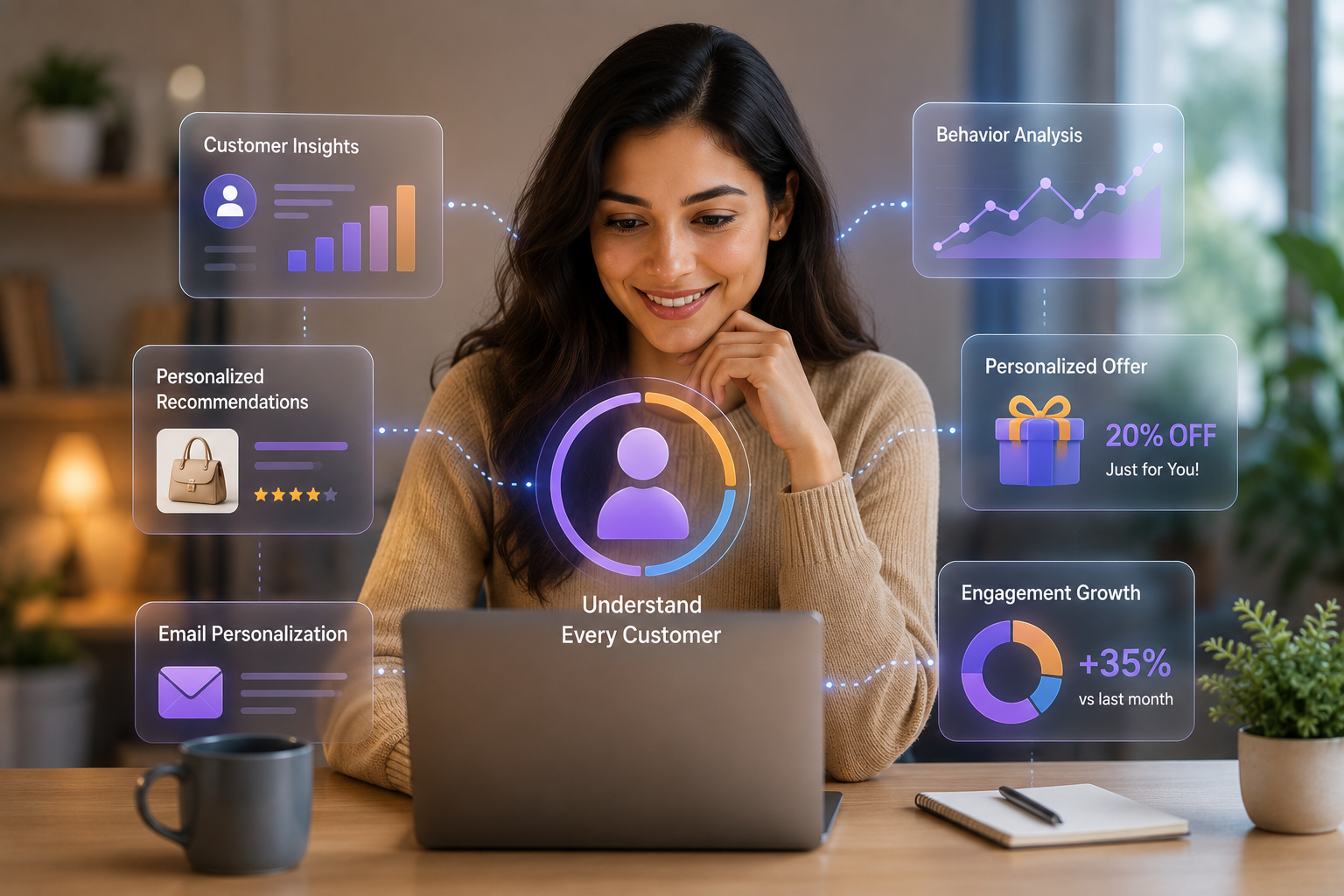
What Is Data-Driven Personalization?
Data-driven personalization is the practice of using customer data to deliver tailored content, product recommendations, emails, advertisements, and website experiences. Instead of showing the same message to every visitor, businesses analyze customer behavior, demographics, purchase history, browsing patterns, and engagement data to create highly personalized interactions.
Thanks to artificial intelligence (AI) and machine learning, brands can now process large volumes of data in real time, allowing them to personalize experiences at every stage of the customer journey.
Why Personalization Matters in 2026
Consumer expectations have evolved significantly over the past few years. Customers interact with brands across multiple platforms, including websites, search engines, social media, mobile apps, and voice assistants. They expect a consistent and personalized experience wherever they engage.
Businesses that invest in personalization can benefit from:
- Higher customer engagement
- Increased conversion rates
- Better customer retention
- Improved return on marketing investment (ROI)
- Stronger brand loyalty
When customers receive relevant content instead of generic promotions, they are more likely to trust a brand and make purchasing decisions.
How AI Powers Personalization
Artificial intelligence has transformed personalization from a manual process into an automated, intelligent system. AI can analyze customer behavior instantly and make predictions about what users are most likely to want next.
For example, AI can:
- Recommend products based on previous purchases.
- Personalize email subject lines and content.
- Display dynamic website content for different visitors.
- Optimize advertisements based on user interests.
- Predict future customer needs through behavioral analysis.
Instead of marketers manually segmenting audiences, AI continuously learns and improves personalization with every customer interaction.
Real-World Applications
Many successful businesses already use data-driven personalization in their daily marketing strategies.
An e-commerce website recommends products similar to what a customer recently viewed. A streaming platform suggests movies based on watch history. A travel website offers customized holiday packages depending on previous searches. Even email campaigns now send messages at the time each subscriber is most likely to open them.
These personalized experiences create convenience for customers while increasing sales opportunities for businesses.
Best Practices for Businesses
To succeed with data-driven personalization, businesses should focus on quality rather than quantity of data.
Key practices include:
- Collect customer data ethically and transparently.
- Respect privacy regulations and obtain user consent.
- Integrate data from multiple marketing channels.
- Use AI tools for predictive analytics.
- Continuously test and optimize personalized campaigns.
- Measure performance using engagement, conversion, and customer retention metrics.
Personalization should always enhance the customer experience rather than feel intrusive.
Looking Ahead
As AI technology continues to evolve, personalization will become even more sophisticated. Future marketing will predict customer intent before users actively search, automate customer journeys across channels, and deliver highly relevant experiences in real time.
Businesses that embrace data-driven personalization today will be better equipped to compete in an increasingly customer-centric digital landscape.
Conclusion
In 2026, data-driven personalization is no longer a competitive advantage—it’s an essential part of successful digital marketing. By combining customer insights with AI-powered analytics, businesses can create meaningful experiences that increase engagement, strengthen customer relationships, and drive long-term growth. Companies that prioritize personalization while respecting user privacy will be the ones that stand out and thrive in the future of digital marketing.