
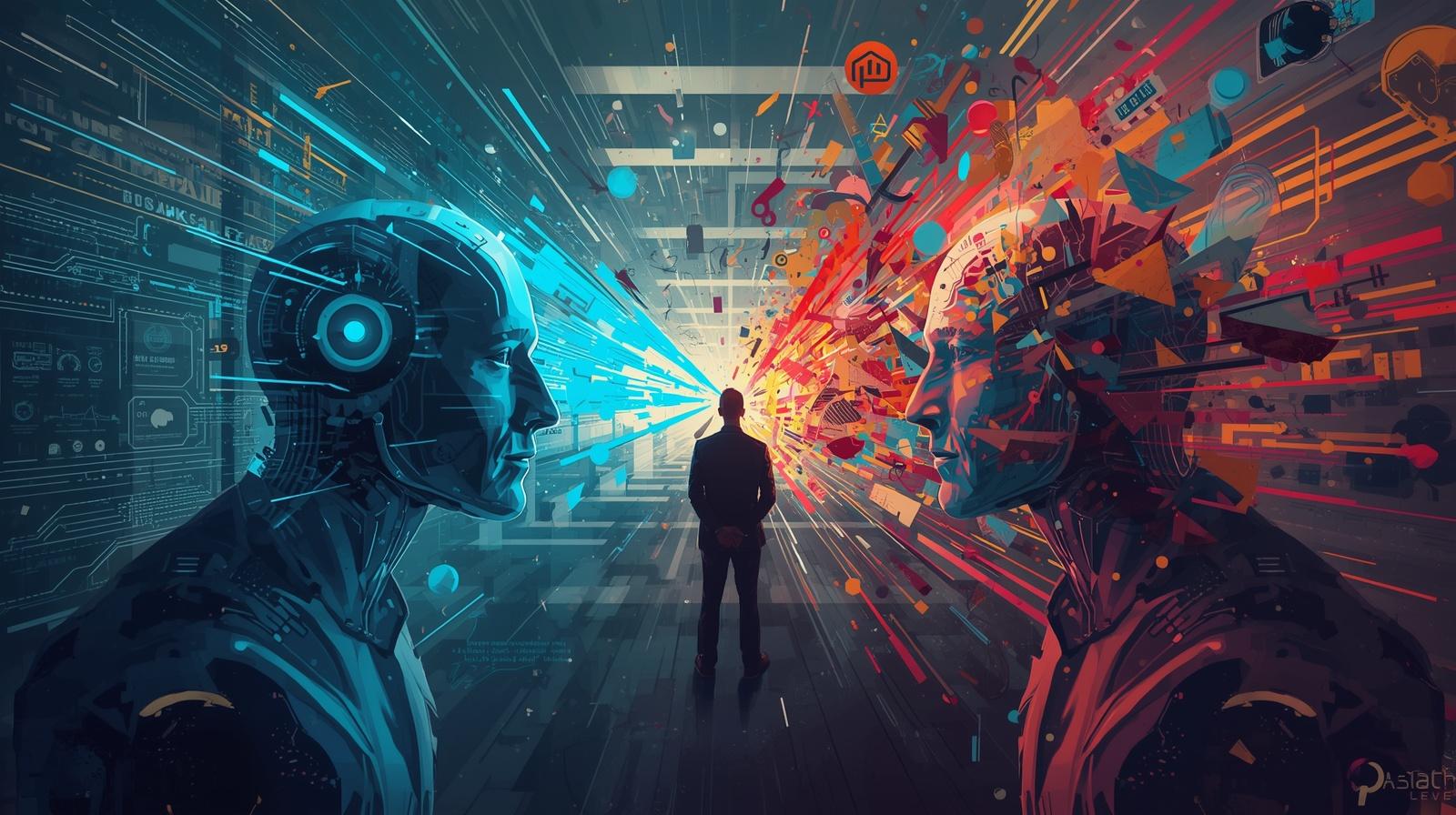
The rise of artificial intelligence has transformed the way marketing works. From generating content to analyzing customer behavior, AI is now a powerful tool in every marketer’s toolkit. But this rapid growth raises an important question—can AI replace human creativity, or is there still something uniquely human that machines cannot replicate?
Let’s be clear: AI is incredibly efficient. It can analyze massive amounts of data within seconds, identify trends, and generate content at scale. Need 10 social media captions, ad copies, or blog outlines? AI can do it in minutes. It helps marketers save time, reduce costs, and maintain consistency. It also excels at personalization—delivering the right message to the right audience at the right time based on data-driven insights.
However, creativity is not just about speed or efficiency. True creativity comes from emotions, experiences, intuition, and cultural understanding—areas where humans still have a clear advantage. A human marketer understands humor, empathy, storytelling, and emotional triggers in a way that AI simply cannot fully replicate. For example, a heartfelt campaign that connects with people on a deeper level often comes from real human insight, not just data.
AI works based on patterns and existing information. It learns from what already exists and uses that to create something new. But it doesn’t “feel” or “experience” anything. This means while AI can generate ideas, those ideas may sometimes lack originality or emotional depth. Human creativity, on the other hand, thrives on unpredictability and innovation—thinking beyond patterns and creating something truly unique.
That said, it’s not about choosing one over the other. The real power lies in combining both. AI can handle repetitive tasks, data analysis, and initial drafts, while humans can refine, personalize, and add emotional intelligence to the final output. Think of AI as a creative assistant rather than a replacement.
For instance, a marketer can use AI to generate multiple ad concepts quickly, then select the best ones and enhance them with storytelling, brand voice, and emotional appeal. This not only saves time but also improves the quality of the content. Similarly, AI can provide insights into what works, but humans decide how to use those insights creatively.
Another important factor is brand identity. Every brand has a unique voice, personality, and story. While AI can mimic tone to some extent, maintaining authenticity requires human judgment. Audiences today value genuine connections, and that’s something only humans can consistently deliver.
So, who wins in the battle between AI and human creativity? The answer is—neither. It’s not a competition but a collaboration. AI brings speed, efficiency, and data-driven precision, while humans bring emotion, originality, and meaning.
In the future of marketing, the most successful professionals will not be those who rely only on AI or only on creativity, but those who know how to blend both effectively. By leveraging AI as a tool and human creativity as the driving force, marketers can create campaigns that are not only efficient but also impactful and memorable.
In the end, AI can assist creativity, but it cannot replace the human touch—and that’s what truly makes marketing powerful.